
- How to Measure Real Value in AI Projects
From AI Pilots to Enterprise Value
In recent years, organizations have rapidly increased their investments in artificial intelligence. However, many AI initiatives fail to move beyond the pilot stage or struggle to deliver measurable business value.
One of the main reasons is that AI projects are often evaluated using the wrong metrics.
Most data science teams measure model success using technical indicators such as:
-
Accuracy
-
Precision
-
Recall
-
Prediction performance
While these metrics are important for model development, they do not answer the most important question for business leaders:
“How much value does this AI project create for the organization?”
For executives and decision-makers, the key issue is not technical performance but business value and economic impact.
Why Technical Metrics Are Not Enough
Technical metrics describe how well a model performs statistically, but they do not directly measure business outcomes.
For example, an AI model might achieve 90% accuracy. However, this metric alone does not tell us whether the model:
-
increases revenue
-
reduces operational costs
-
lowers customer churn
-
improves operational efficiency
Successful AI initiatives therefore go beyond technical evaluation and incorporate business performance metrics.
Business Metrics That Matter in AI Projects
To evaluate the true value of enterprise AI initiatives, organizations should focus on metrics such as:
-
Return on Investment (ROI)
-
Revenue growth
-
Cost reduction
-
Risk mitigation
-
Customer acquisition
-
Operational efficiency
These metrics help create a common language between data science teams and business stakeholders, ensuring that AI initiatives align with strategic objectives.
Example: AI-Driven Fraud Detection
Consider a bank implementing an AI system to detect credit card fraud.
In a typical scenario:
-
The bank processes 100 million transactions annually
-
About 0.1% of transactions are fraudulent
Without fraud detection, the bank could lose approximately $50 million per year due to fraudulent transactions.
By implementing a machine learning model that detects fraud more effectively:
-
A significant portion of fraudulent transactions can be blocked
-
Total losses could be reduced to around $34 million
This represents approximately $16 million in annual savings.
This example demonstrates a key insight:
The success of an AI system should not be measured by model accuracy alone, but by the business value it creates.
Three Key Principles for Successful AI Investments
1️⃣ Start with business objectives
AI initiatives should be designed around value creation, not technology experimentation.
2️⃣ Connect technical results to business outcomes
Model performance must translate into measurable business impact.
For example:
-
prediction accuracy → cost savings
-
customer predictions → revenue growth
-
risk predictions → loss reduction
3️⃣ Integrate AI into operational processes
AI becomes valuable only when it is embedded in real business workflows and decision processes.
Conclusion
The success of AI initiatives should be measured not by model accuracy alone but by their ability to generate business value.
For AI pilots to evolve into enterprise-level transformation, organizations must:
-
adopt business-focused performance metrics
-
align data science and business teams around shared goals
-
link AI investments to measurable strategic outcomes
When these elements come together, artificial intelligence moves beyond experimentation and becomes a true source of competitive advantage.
Strategic Perspective
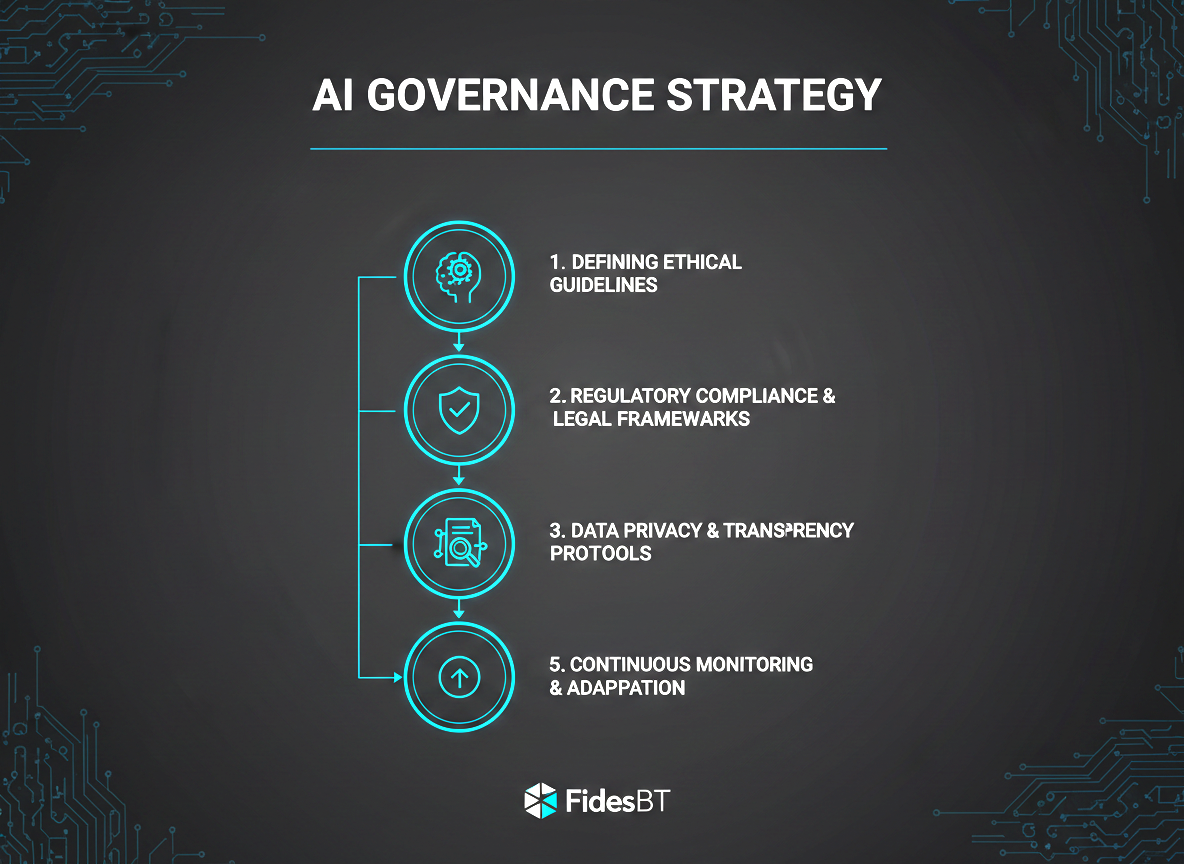
Achieving sustainable value from AI investments is not simply about choosing the right technology. The real differentiator lies in managing artificial intelligence in alignment with organizational governance, risk management, and strategic objectives.
Today, the critical question for organizations is no longer “Should we use AI?” but rather “How can we generate measurable value from AI?”
Frameworks such as ISO/IEC 42001 AI Management Systems help organizations move beyond experimental pilots and transform AI initiatives into strategic assets. When value-driven measurement, strong governance, and process integration come together, artificial intelligence evolves from a technological tool into one of the most powerful drivers of organizational transformation and competitive advantage.
- Contact
Our expertise in our relationships and in our training is our ilk. If you get in touch with us, we can decide together how we can help you and how we can contribute. You can contact us for your immediate needs or your long-term goals.
Address
Ankara / TURKEY